
Philip Pullman is Wrong About Narnia
Grown ups aren't always grown up

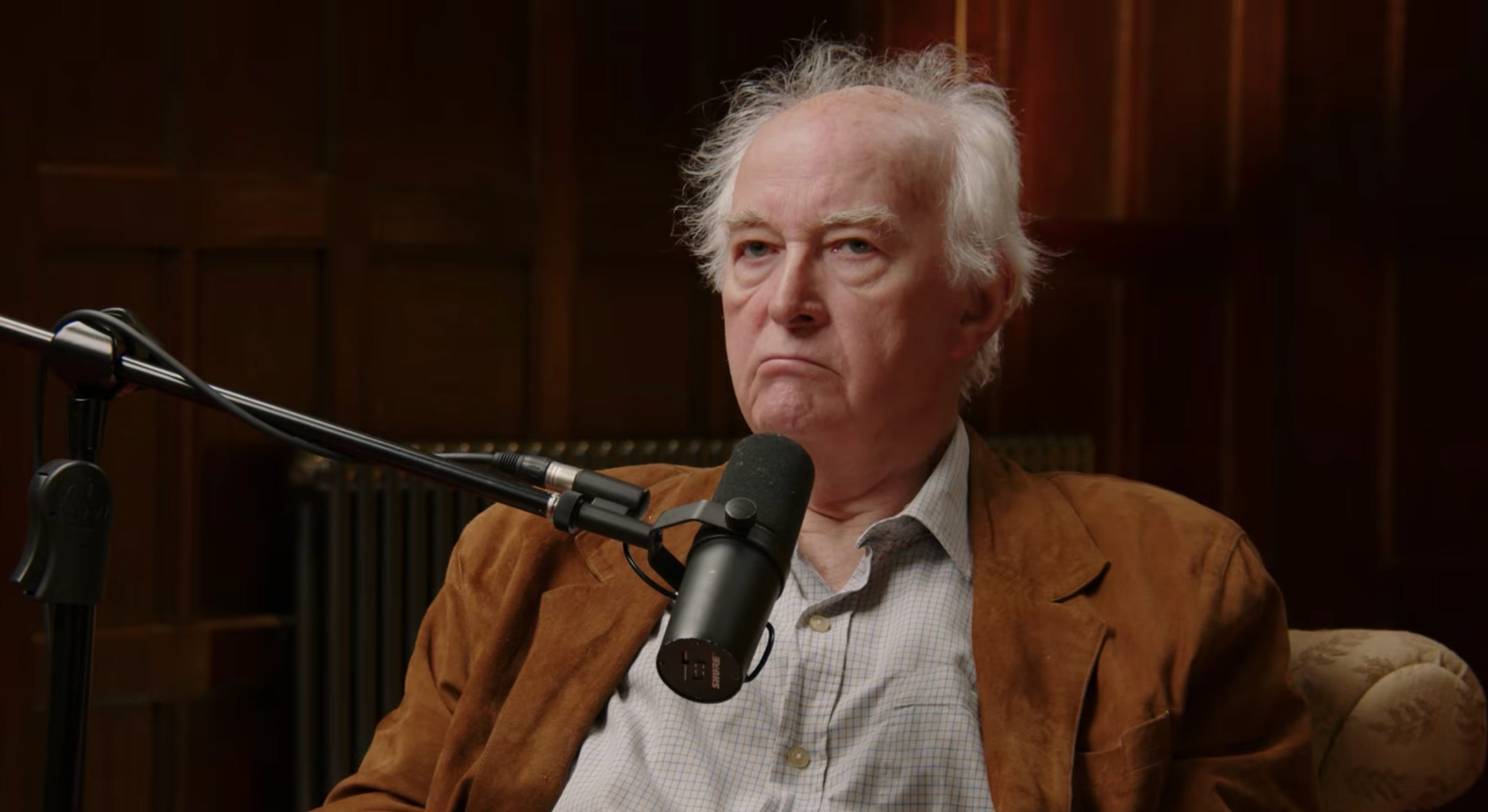
Author Philip Pullman recently made an appearance on Alex O’Connor’s Within Reason podcast and took up one of his recurring complaints: the apparent terribleness of C.S. Lewis. Pullman called Lewis a “terrible storyteller” and said “I don’t like what he does in the Narnia books.” He accuses Lewis of mistreating his characters because the children die in the end in a railway accident, which is “the most ghastly way out, he couldn’t face the responsibility of making them grown up. He didn’t want them to be grown up. He wanted them to turn away from, what was it, things like nylons and invitations and things. Which is a terrible thing to do to a child who’s on the verge of growing up. Children don’t want to be sent to heaven, they want to grow up and become men and women. The promptings of sexuality in the teenage mind are important and wonderful and valuable and just to dismiss them in that offhand way…terrible, terrible things.” As the thumbnail Alex has used announced, Lewis according to Pullman tells “filthy lies.”
Most of what Pullman is referring to here comes from the final and probably least well known book in the Narnia series, The Last Battle. The protagonists of the book are not actually the four original children but Eustace and Jill who previously appear in The Silver Chair and last Narnian King, Tirian. In the book, a talking ape discovers a hunter’s lion skin washed down a river and persuades his hapless donkey friend to wear it in order to trick Narnia into believing Aslan has returned. It is only at the end, as the real Aslan arrives and it turns out to be the end of the Narnian world that all of the previous children arrive, before entering through a doorway created by Aslan into what turns out to be the “real” Narnia. The children had thought they had come to Narnia as they had before and would return back to their world, but Aslan tells them they in fact died in a train accident, and could now enter the true Narnia, of which the Narnia they had visited was a Platonic copy.
There is much to say about this last book, it contains and wraps into it some of Lewis’ most important themes, and its devices are ingenious, although there are some passages that are both clumsy and controversial, including what appear to be certain racial stereotypes, but Pullman is referencing specifically a controversy often called “the problem of Susan.” When the original children reappear, Susan, the oldest of the sisters, is not present. Susan has not returned, they are told, because she’s “a jolly sight too keen on being grown-up” and “she’s interested in nothing nowadays except nylons and lipstick and invitations.” Thus, C.S. Lewis is a terrible sexist, what lurks behind the aversion to growing up that seems to be a theme of the books must be a lurking fear of female sexuality, and Lewis just doesn’t want his characters to go through puberty so he takes “the most ghastly way out” and has his characters die while still children and Susan doesn’t come back just to hammer the point home.
There are a couple of things here that I agree with to give Pullman his due. The first, is that the line about Susan is clumsy and casts Lewis’ as unavoidably a product of his time; the second is that the children dying on a train is not Lewis’ finest moment as a plot weaver. I think the latter point has absolutely nothing to do with Lewis refusing to let them grow up, as we we will get to, but he simply wanted them to arrive at the grand ending and he wanted the climax to illustrate his Platonic view of heaven and be a happily ever after, so he just jumped them there with “oh and you’ve died, the end.”
The idea though that this is a sinister refusal to let his characters grow up because he hates adulthood is a far less charitable interpretation. Firstly, these are children’s books about children featuring children, as are all children’s books or television shows. Secondly, the grown up professor Digory turns out to have visited Narnia as a child, and appears as a child in the novel The Magician’s Nephew, and subsequently grows up. Thirdly, while the loss of childhood is a theme throughout the Narnia books (as it actually is archetypically in many children’s stories), Pullman is failing to bother to understand what Lewis is saying, or what most of Lewis’ less cantankerous and cynical readers actually took from it. After all, many who loved Lewis’ Narnia books grew up and didn’t then come to reject them as adults.
So if the loss of childhood or something childlike is a theme in the Narnia books, we must ask the question of what the thing lost is, and whether the thing to be afraid of in regards to growing up is a lurking psycho-sexual spectre. Taking a single clumsy line about Susan doesn’t help us that much here because a) while those looking for reasons to find some sinister psychological motivation might project this it doesn’t actually say anything particularly about sexuality and b) it doesn’t appear to reflect any of Lewis’ wider themes, or anything that he has said about the subject.
Instead, it seems, what Lewis considers to be that which is lost is not innocence as much as imagination, or rather, the innocence that is lost is not a fact of childhood itself but something adults convince themselves is childish.
It’s important then to consider what Narnia actually was analogous to, and Lewis happens to say so at the start of The Voyage of the Dawntreader:
And of course they were talking about Narnia, which was the name of their own private and secret country. Most of us, I suppose, have a secret country but for most of us it is only an imaginary country. Edmund and Lucy were luckier than other people in that respect Their secret country was real. They had already visited it twice; not in a game or a dream, but in reality.1
Lewis himself later said;
When I was ten, I read fairy tales in secret and would have been ashamed if I had been found doing so. Now that I am fifty, I read them openly. When I became a man I put away childish things, including the fear of childishness and the desire to be very grown up.2
Lewis is saying here that there is a certain kind of imaginative freedom that is childlike but that can be socially condemned as childish. As children we all have our imaginative worlds, as adults we put those worlds away with a kind of embarrassment and claim ourselves rational and free from the kind of childishness that comes with 'believing’ fairy stories to be ‘true.’
Of course, not wishing to grow up has long been a theme of children’s stories. But not only in children’s stories, in 1990 Ben Okri won the Booker Prize for The Famished Road, a novel about a “spirit child” in Nigeria where Okri grew up, a child who is born from the blissful spirit world. Spirit children as soon as they are born always seek to die in order to return, and parents dread their child being one. But Azaro, the protagonist and narrator, rejects the call to return to the blissful land and chooses to stay out of love for his parents and in order to live and experience a life of suffering, in which adulthood is indeed to be feared, as he explains why these spirit children wish to leave:
We disliked the rigours of existence, the unfulfilled longings, the enshrined injustices of the world, the labyrinths of love, the ignorance of parents, the fact of dying, and the amazing indifference of the living in the midst of the simple beauties of the universe. We feared the heartlessness of human beings, all of whom are born blind, few of whom ever learn to see.3
This perspective of a child upon the raw suffering of the world of Nigeria is what made the book so affecting and the reason it was so lauded at the time. Michael Palin said of the book “It made me, at age 50, look at the world through the wide eyes of a child.”
There is a significant connection here to Lewis’ The Last Battle, a connection best understood through a poem by Wordsworth titled Ode: Intimations of Immortality. Begun in 1802 while living in the Lake District with his sister, the Ode deals with Wordsworth’s sense that childhood memories of a divine presence in the natural world had become and continued to dim as he travelled into adulthood. The opening lines look back to childhood, “There was a time when meadow, grove, and stream, / The earth, and every common sight, / To me did seem / Apparelled in celestial light,” and are answered by the complaint of his present condition of adulthood “It is not now as it hath been of yore; — / Turn wheresoe’er I may, / By night or day. / The things which I have seen I now can see no more.”
Wordsworth, it seems, connects the dimming of this childhood vision of the world apparelled in celestial light to a sense that, like Okri’s spirit child, we come into the world as into a kind of exile from the realm of the divine. The fourth stanza, the last of the four initially composed in 1802 ends with the reflection “Where is it now, the glory and the dream?”. The answer for Wordsworth is simple: “Our birth is but a sleep and a forgetting: / The Soul that rises with us, our life’s Star, / Hath had elsewhere its setting, / And cometh from afar: / Not in entire forgetfulness, / And not in utter nakedness, / But trailing clouds of glory do we come / From God, who is our home”.
C.S. Lewis however would object to Wordsworth’s location of his longing for a divine presence as something lost in the past. This is important, as it contradicts Pullman’s claim that Lewis’ central point is the loss of childhood. Longing was a theme of Lewis’ religious life, a reason for his Christian conversion, and one of his most central arguments for belief in God. In an essay titled The Weight of Glory, he references this Wordsworth poem:
Our commonest expedient is to call it beauty and behave as if that had settled the matter. Wordsworth’s expedient was to identify it with certain moments in his own past. But all this is a cheat. If Wordsworth had gone back to those moments in the past, he would not have found the thing itself, but only the reminder of it; what he remembered would turn out to be itself a remembering. The books or the music in which we thought the beauty was located will betray us if we trust to them; it was not in them, it only came through them, and what came through them was longing. These things — the beauty, the memory of our own past — are good images of what we really desire; but if they are mistaken for the thing itself they turn into dumb idols, breaking the hearts of their worshippers. For they are not the thing itself; they are only the scent of a flower we have not found, the echo of a tune we have not heard, news from a country we have never yet visited.4
Indeed, the reason Lewis wishes for all of his previous characters to arrive when they do, is as an illustration of exactly this theme. In the climax of The Last Battle, the children enter into a world they realise to be Narnia, which somehow is also connected to England, except that both of these turn out to be the real Narnia and the real England, of which their worlds were only copies or images:
Perhaps you will get some idea of it if you think like this. You may have been in a room in which there was a window that looked out on a lovely bay of the sea or a green valley that wound away among mountains. And in the wall of that room opposite to the window there may have been a looking-glass. And as you turned away from the window you suddenly caught sight of that sea or that valley, all over again, in the looking glass. And the sea in the mirror, or the valley in the mirror, were in one sense just the same as the real ones: yet at the same time they were somehow different — deeper, more wonderful, more like places in a story: in a story you have never heard but very much want to know.5
Thus, for Lews, there is something to the role of story and imagination in our proper possession of this longing. There is something of the cynicism of adolescence which he clumsily attributes to Susan that is analogous to a cynicism more widely towards the world by which the very idea of the kind of belief he describes is dismissed:
Almost our whole education has been directed to silencing this shy, persistent, inner voice; almost all our modern philosophies of progress or creative evolution themselves bear reluctant witness to the truth that our real goal is elsewhere. When they want to convince you that earth is your home, notice how they set about it. They begin by trying too persuade you that earth can be made into heaven, thus giving a sop to your sense of exile in earth as it is. Next, they tell you that this fortunate event is still a good way off in the future, thus giving a sop to your knowledge that the fatherland is not here and now. Finally, lest your longing for the trans temporal should awake and spoil the whole affair, they use any rhetoric that comes to hand to keep out of your mind the recollection that even if all the happiness they promised could come to man on earth, yet still each generation would lose it by death, including the last generation of all, and the whole story would be nothing, not even a story, for ever and ever.6
One might point out then that what this boils down to for Pullman is a rejection of Lewis’ entire worldview, of his belief in God and the very idea in a hope oriented towards the transcendent. Indeed, he has claimed elsewhere that he also objects to the children dying precisely for this reason, he said Lewis views his children in his story “regard life in this world as so worthless and contemptible that they leave it with pleasure and relief…a railway accident is not an end-of-term treat.”7
Once again, it’s pretty obvious the extent to which this reveals Pullman’s own gripes rather than an actual critique of what Lewis has ever written or said or any demonstration that he is actually a “terrible storyteller.” Not only do Lewis’ arguments clearly not view the world as “worthless and contemptible” but they cast it as made in the very image of glory, and so shining with the celestial light Wordsworth locates in his childhood and fears he is losing. Joy is valorised and giving present meaning, death is given hope, life is given moral imperative and purpose. Pullman, who has previously said in an interview he is “trying to undermine the basis of Christian belief”8 simply rejects Lewis worldview more broadly. In my view his accusation of Lewis being a terrible storyteller reflects little but his own resentment to someone who remains popular even in those who loved him as a child and have now grown up and continues to outsell him in spite of his attempts to cast himself as superior.
Of course none of that means the Narnia books are perfect, they are not. Compared to Tolkien’s high mythology they can often appear trite in moments (such as Father Christmas randomly turning up), but Lewis’ themes are decidedly not trite, and there are reasons he remains beloved as an author. (In case you’re wondering even Tolkien has come under Pullman’s withering cynicism, he previously condemned Tolkien for being “male orientated” and having “little of interest to a reader of literature.”9 )
The fact is that a general discussion of Lewis imperfect storytelling might actually be a thoroughly interesting topic of discussion. For example, would Lewis’ ultimate device of fulfilled longing have been more effective if the children had lived their whole lives and returned at the end of them? Possibly, it’s interesting to think so. But distaining Lewis for his choices does little but reveal one’s own prejudice, a prejudice that reflects exactly the cynicism Lewis is rejecting in those who consider themselves “grown up.” And perhaps, ironically, all that listening to someone like Pullman complain about the Narnia books makes me want to do is go and read them again.
Lewis, The Voyage of the Dawntreader, Lion, 1952
Lewis, On Stories: And Other Essays on Literature, HarperOne, 2017
Ben Okri, The Famished Road, Vintage, 1991
Lewis, The Weight of Glory and other addresses, Harper Collins, 1976
Lewis, The Last Battle, Lion, 1956
ibid
Pullman ‘The Republic of Heaven’, 2001 The Horn Book inc
Interview in the Washington Post, 2001
I listened to that interview. I get the sense that Pullman is in that type of literary agon with Lewis that Bloom described. Pullman has a sense of the transcendent in his 'rose garden' analogy, and in the symbol of the dust as the stuff of consciousness. I don't think his aims are that different from Lewis, except that he lacks faith, and so he has to find some way to differentiate himself and escape the shadow cast by Lewis.
Pullman’s unsubstantiated characterization of Lewis as a poor storyteller is little more than a rejection of Lewis’ foundational story, made most obvious in his complete misunderstanding of the children’s joy at discovering not that they are dead (which they already suspected might be the case and is merely being confirmed), but that they now get to enjoy the presence of Aslan forever.